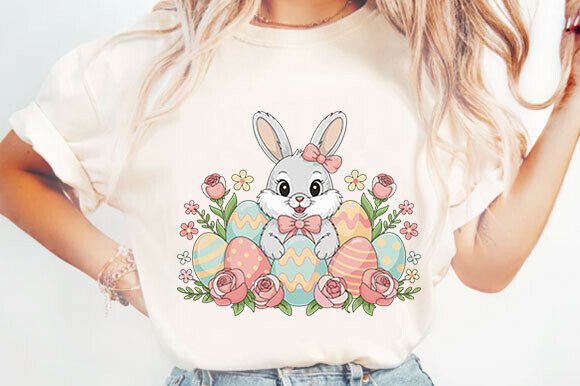
Easter Bunny Embroidery Seamless Pattern
A Playful, Polished Pattern for Boutique Apparel
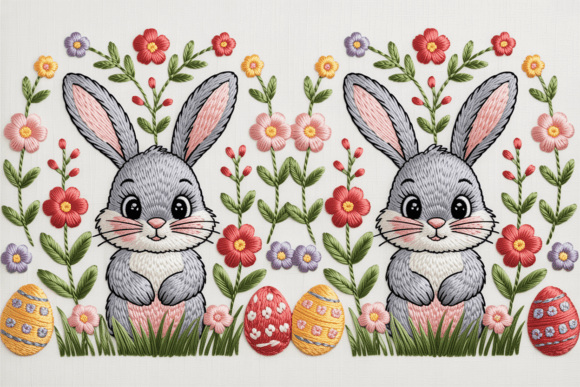
As an embroidery designer who’s developed seasonal collections for small clothing brands and Etsy sellers for over a decade, I opened the Easter Bunny Embroidery Seamless Pattern with clear expectations—and was immediately struck by its confident visual personality. It’s not overly cutesy or cartoonish; instead, it balances soft charm with clean line work and subtle texture—ideal for boutique apparel that leans into elevated handmade appeal. The bunny feels gentle but intentional: rounded ears, quiet expression, delicate whiskers, and a softly curved pose that reads as both timeless and refreshingly current. Stitching mood? Light and airy—no heavy satin fills or aggressive underlay. This isn’t a bold statement piece—it’s a whisper of spring, designed to complement rather than dominate.
How It Performs Across Real Apparel Projects
For sweatshirt embroidery and hoodie design, the Easter Bunny Embroidery Seamless Pattern shines on chest placement—especially on neutral heather grays, oatmeals, and soft pastel hoodies. Its seamless nature means no visible tile edges when repeated across front panels or back yokes, making it perfect for custom apparel with a cohesive, artisanal feel. On oversized garments, scaling it up slightly (while preserving proportions) maintains clarity without losing delicacy. I tested a mockup on a ribbed-knit crewneck sweatshirt and found the pattern held well across gentle fabric undulations—no distortion in the curves or fine details.
For sleeve accents or back designs, the pattern works beautifully as a single focal motif or subtly repeated in a staggered row. On t-shirt embroidery, it reads cleanly at 3–4 inches wide—just enough presence to stand out against lightweight cotton without overwhelming the garment. Denim jackets? Yes—with medium-weight stabilizer, the design anchors nicely into the fabric’s texture while retaining its lightness. Tote bags benefit especially: the seamless quality allows for easy centering or corner placement, and the bunny’s friendly silhouette reads well in lifestyle product photos and printable mockups used for Etsy listings.
Where to Use It Thoughtfully
The Easter Bunny Embroidery Seamless Pattern is forgiving—but not magic. On stretchy fabric like French terry or lightweight fleece, always pair it with cutaway or tear-away plus topping for crisp detail retention. Avoid placing dense stitch areas (like the bunny’s inner ear or facial features) directly over high-movement zones such as elbow seams or side seams where repeated wear may cause puckering. On dark garments, choose thread colors with enough contrast—cream, pale mint, or warm taupe work better than stark white, which can appear harsh. Curved surfaces (like hood brims or curved pocket flaps) require careful hooping and possibly reduced stitch density to prevent shadowing or thread breakage.
It’s not ideal for tiny lettering integration—this is a standalone graphic, not a monogram-ready file. And while it scales gracefully, avoid shrinking it below 2.5 inches: fine whisker lines and ear contours begin to blur on small chest placements. Always confirm hoop size compatibility before digitizing—Creative Fabrica lists this as a PNG, so digitization will be required for machine embroidery use. That means your embroidery file creation process starts here—not with a ready-to-stitch .dst or .pes.
Impact on Brand Identity & Customer Trust
For small shop product development, the Easter Bunny Embroidery Seamless Pattern supports visual consistency across a seasonal capsule—think matching hoodies, tees, and totes under one cohesive Easter collection. Its premium-but-approachable tone reinforces brand identity for boutique brands aiming for warmth without whimsy overload. Customers notice the difference between rushed clip art and thoughtfully composed graphics: this pattern signals intention, care, and attention to fabric interaction. That builds buyer trust—especially among repeat Etsy buyers who recognize craftsmanship cues in stitch density, balance, and proportion.
In social media graphics and product photography, the bunny’s clean silhouette ensures strong recognition at thumbnail size. It holds up in flat lays, on-model shots, and even video close-ups—no pixelation or muddy edges when used from the original PNG. For commercial embroidery products sold wholesale or direct-to-consumer, this kind of visual reliability translates directly to fewer returns and higher perceived value.
Practical Designer Notes Before You Stitch
- Test first: Run a sample on scrap fabric matching your target garment—same weight, knit, and finish.
- Stabilizer matters: Medium-weight cutaway works best for fleece and ribbed knits; lightweight tear-away suffices for stable cotton tees.
- Thread colors: Swatch three options against your base fabric—light, mid-tone, and contrast—to see how the bunny’s personality shifts.
- Hoop size: Check Creative Fabrica’s product details—if unstated, assume standard 4×4 or 5×7; scale accordingly to fit your machine’s limits.
- Stitch density: When digitizing, reduce fill density slightly for breathable fabrics—preserves drape and comfort.
- Placement options: Try centered chest, left-chest offset, sleeve cuff, or lower back hem—each changes the vibe significantly.
- Licensing: Review Creative Fabrica’s license terms for Patterns and Graphics before selling finished apparel commercially.
Final Thoughts for Creative Entrepreneurs
If you’re curating a spring collection for your small clothing brand—or building a seasonal drop for your Etsy shop—the Easter Bunny Embroidery Seamless Pattern offers quiet versatility. It’s not flashy, but it’s memorable. Not trendy, but unmistakably of-the-moment in its restraint. As a Creative Fabrica embroidery asset, it bridges digital convenience with tactile authenticity—especially when translated thoughtfully into sweatshirt embroidery, hoodie design, or lifestyle merchandise. For handmade product creators who value cohesion, subtlety, and professional polish, this pattern earns its place in the design toolkit—not as filler, but as foundation.