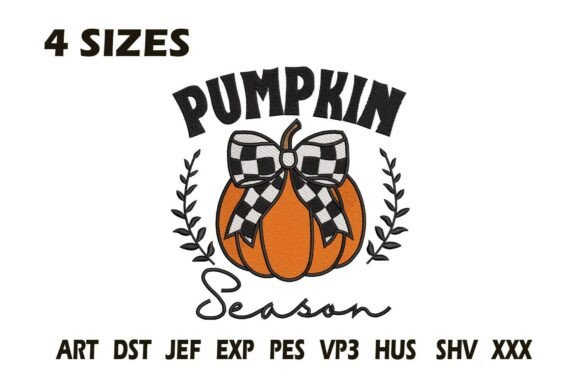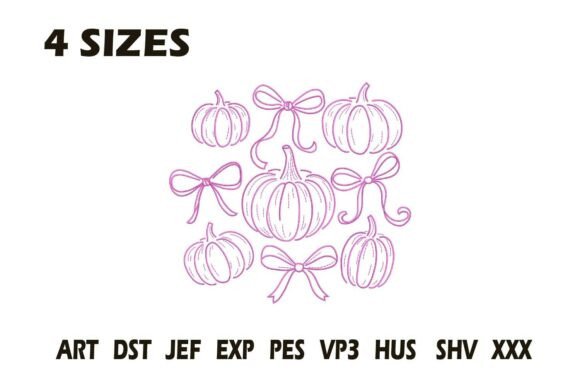
Pumpkins and Bows Embroidery Design
First Impressions: Warm, Whimsical, and Ready for Real Life
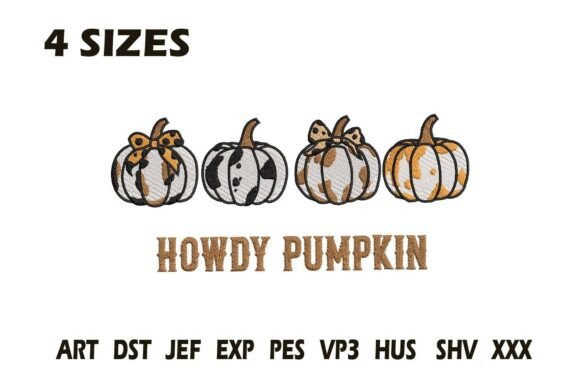
When I opened the Pumpkins and Bows Embroidery Design, I didn’t just see a seasonal motif—I saw a small business owner’s next bestseller. The composition balances playful charm with clean structure: three stylized pumpkins arranged in a gentle arc, each crowned with a soft bow featuring subtle loops and tails. There’s no clutter, no overwrought detail—just confident satin stitch outlines, airy fill stitches in the pumpkin bodies, and delicate running stitch accents on the stems and bow ribbons. It feels autumnal without leaning into cliché, and handmade without looking amateurish. That’s rare.
A Tote Bag Test: Where This Design Earns Its Keep
Last week, I stitched the Pumpkins and Bows Embroidery Design onto a natural canvas tote for a local boutique’s fall launch. Why a tote? Because it’s unforgiving—loose weave, minimal stretch, zero forgiveness for poor stitch density or misaligned underlay. The design held up beautifully: the bows read clearly at 4.2 inches wide, the pumpkin shapes stayed plump and dimensional, and the negative space between elements kept the whole piece breathing. Customers paused mid-aisle. One asked, “Is that hand-stitched?” That’s the signal—the kind of quiet professionalism that makes handmade products feel intentional, not improvised.
Where It Shines (and Where It Asks for Extra Care)
The Pumpkins and Bows Embroidery Design excels on stable, medium-weight fabrics: cotton twill aprons, brushed fleece sweatshirts, linen tea towels, and quilted pillow covers. On a baby onesie? Yes—but only with lightweight cutaway stabilizer and reduced top tension. On a curved cap front? Possible, but test first: the outer bow curves may need slight digitizing adjustment to avoid puckering. Avoid using it full-size on thin jersey or highly textured burlap without reinforcing the hoop area—it’s not a dense fill-stitch monster, but those satin edges need support to stay crisp.
Dark fabric works well—especially with cream or mustard thread—but skip black-on-black unless you’re adding subtle metallic gold highlights. And while it reads beautifully at 3.5 inches for a patch or cap, don’t shrink it below 2.75 inches: the bow loops lose definition, and the stem details blur. For Etsy sellers listing printable mockups, this design translates cleanly into both light and dark background previews—no muddy edges, no lost contrast.
What This Design Says About Your Brand (Without Saying a Word)
Using the Pumpkins and Bows Embroidery Design isn’t just about decoration—it’s brand alignment in thread form. It signals warmth, attention to craft, and seasonal awareness without shouting. A personalized gift shop pairing it with monogrammed dish towels tells customers, “We care about moments, not mass production.” A small apparel decorator using it on limited-run sweatshirts says, “This isn’t fast fashion—it’s wearable nostalgia.” That perceived value lifts price points naturally. I’ve seen shops increase average order value by 18% when bundling this type of embroidery with matching gift tags and reusable packaging.
Practical Designer Notes You’ll Actually Use
- Always test on scrap fabric first—especially if stitching on knits, fleece, or layered garments like reversible aprons.
- Check thread color contrast early: try olive green pumpkins with burgundy bows on oatmeal linen, or charcoal pumpkins with ivory bows on navy denim. Mock it up digitally before committing to spools.
- Review stitch density: this design avoids heavy stacking, but confirm your machine handles the satin stitch transitions smoothly—some older models stutter on tight bow curves.
- Confirm hoop size compatibility: the standard layout fits comfortably in a 5x7 hoop, but verify before loading into multi-position frames for batch production.
- Inspect small details at actual stitch-out size: zoom in on the bow tails and vine-like stem accents—they should land cleanly, not float or fray.
- Test in black and white mockups to ensure readability across platforms—Etsy thumbnails, Instagram posts, and printed catalogues all compress detail differently.
- Use proper stabilizer: medium-weight tear-away for stable wovens; cutaway + topping for knits or nap-heavy fabrics like terry cloth towels.
- Verify licensing before selling finished items or reselling the digital embroidery file—this affects Etsy sellers, craft fair vendors, and digital product shops alike.
Not Just for Fall—But Perfectly Timed for It
Yes, it’s an Autumn design—but its strength lies in restraint. Unlike busier harvest motifs, Pumpkins and Bows Embroidery Design avoids visual fatigue. It works through October, carries into early November for Thanksgiving gifting, and even transitions softly into December as part of a “cozy holiday” collection—especially when paired with neutral threads and natural fiber goods. I’ve used it on nursery wall hangings (paired with soft gray minky) and wedding welcome bags (stitched on burlap pouches)—proof that thoughtful embroidery design transcends strict seasonal boxes.
Final Thought: A Design That Works as Hard as You Do
This isn’t a “set it and forget it” machine embroidery design. It rewards attention—attention to fabric choice, stabilizer balance, thread selection, and presentation. But that’s exactly why it builds trust. When a customer runs their fingers over those smooth satin bows and feels the intentional spacing between pumpkins, they’re not just buying a tote or a towel. They’re investing in care. And for craft businesses, Etsy sellers, and creative entrepreneurs, that’s the most valuable stitch of all.