Autumn Magic Mushroom Embroidery
A Designer’s First Impression: Whimsy Meets Seasonal Warmth
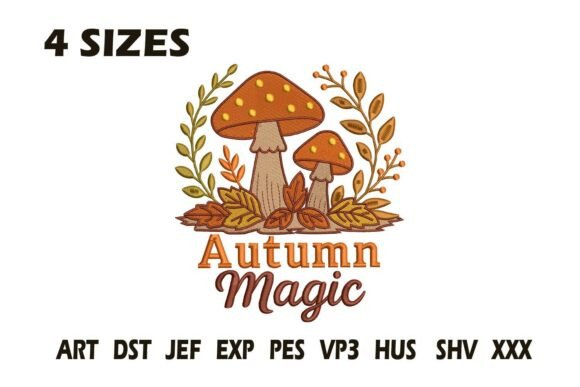
As an embroidery designer who’s curated over 200 seasonal collections, my first glance at Autumn Magic Mushroom Embroidery landed with instant recognition—it’s not just “fall-themed,” it’s emotionally resonant autumn. The design balances playful charm and grounded earthiness: rounded caps with subtle gradients, delicate gills, trailing ferns, and soft mushroom stems that curl like whispered secrets. It feels cozy, nostalgic, and quietly magical—more cottagecore than cartoon, more enchanted forest than pumpkin patch. There’s no forced cuteness or cluttered detail; instead, it leans into elegant simplicity with just enough texture to reward close inspection. That balance makes it unusually versatile: equally at home on a linen tea towel and a baby onesie, a rustic apron and a modern ceramic ornament.
Where It Shines in Real Holiday Product Strategy
For Etsy sellers and small shop owners building limited-edition holiday drops, Autumn Magic Mushroom Embroidery is a quiet powerhouse. On sweatshirt embroidery, it reads beautifully at 3.5–4.5 inches—large enough for visual impact but small enough to leave room for coordinating text (“Cozy Season,” “Mushroom Hunt,” or even monogrammed initials). As a tote bag design, it anchors the lower corner with organic weight, especially when paired with earth-tone thread colors like moss green, burnt sienna, and warm taupe. For kitchen towel embroidery, its clean outlines hold up well against frequent washing—and because it avoids fine linework or micro-details, it won’t ghost or blur after repeated laundering.
It’s also exceptionally strong in gift bundles: imagine a set of three embroidered pillow covers (each featuring a different mushroom variation), a matching embroidered patch for pinning or ironing onto denim jackets, and a linen drawstring bag printed with a minimalist version of the motif. That kind of cohesive storytelling builds brand consistency and increases average order value. On social media previews, Autumn Magic Mushroom Embroidery translates effortlessly into printable mockups—its organic shape lends itself to natural lighting, wood-grain backdrops, and soft shadows. And for craft fairs? Its warmth invites touch and conversation, helping handmade gift buyers connect emotionally before they even ask about price or personalization.
Smart Placement & What to Watch For
While highly adaptable, Autumn Magic Mushroom Embroidery does require thoughtful execution. Avoid using it below 2.75 inches in hoop size—smaller renditions risk losing definition in the cap texture and stem taper. It’s not ideal for curved surfaces like baseball caps unless you confirm the file includes underlay and reduced stitch density for stretch control. On thick terry cloth towels, use medium-weight cutaway stabilizer (not tear-away) to prevent puckering around the base of each mushroom. And if stitching on dark fabric, test thread colors thoroughly: metallic gold may read flat or harsh, while matte pearl gray or deep olive offers richer contrast and better holiday elegance.
Also, skip metallic thread unless the file is explicitly optimized for it—most whimsical mushroom motifs rely on smooth satin fills and gentle fill transitions, which metallics can disrupt. Similarly, avoid pairing it with high-stretch knits (like lightweight French terry) without proper stabilizer backing and reduced top tension. Finally, double-check any layered details—like tiny dewdrops or vine accents—after stitching on your target fabric. A detail that looks crisp in software may compress or distort on plush fleece or loosely woven linen.
Why This Design Lifts Seasonal Appeal—Beyond Aesthetics
Autumn Magic Mushroom Embroidery doesn’t just look seasonal—it feels like a shared seasonal memory. That emotional resonance directly boosts giftability: customers don’t buy mushrooms—they buy nostalgia, comfort, and quiet wonder. For personalized gift makers, it offers easy customization (add a name inside a leafy border, stitch it beside a child’s birth month mushroom), increasing perceived value without complex digitizing. For apparel decorators, it supports family matching items without looking juvenile—think coordinated sweatshirts in tonal neutrals, each with a single mushroom in a different colorway.
From a trust-building standpoint, its restrained detail signals craftsmanship—not rushed clip art. Buyers scanning Etsy listings instantly register quality, which improves click-through rates and reduces returns. Visually, it stands out in crowded holiday feeds because it avoids overused motifs (pumpkins, acorns, plaid). And unlike trend-driven designs, its timeless whimsy ensures longevity—your 2024 kitchen towel embroidery can become a customer’s heirloom piece, reinforcing your brand long after the season ends.
Practical Designer Notes Before You Stitch
- Always test thread colors on both light and dark fabric swatches—especially for seasonal palettes where undertones shift dramatically.
- Check stitch density before bulk production. Overly dense fills increase wear on machines and can stiffen delicate fabrics like silk-blend pillow covers.
- Confirm hoop size compatibility with your most-used frames—many small shop products rely on 4x4 or 5x7 hoops for efficiency.
- Match stabilizer to fabric texture: lightweight cutaway for knits, medium cutaway for towels, tear-away for stable wovens like cotton aprons or table linens.
- Create realistic mockups using actual product photos—not generic templates—to assess scale and placement before listing.
- Review small details post-stitch on your target fabric—gills, stems, and leaf edges should remain distinct, not fused or frayed.
- Plan cohesive color palettes across product types (e.g., olive + cream for towels, rust + oat for sweatshirts) to strengthen brand recognition.
- Verify commercial licensing before selling finished products—this is essential for Etsy sellers, holiday market vendors, and wholesale partners using the embroidery file.
Bottom line? Autumn Magic Mushroom Embroidery isn’t just another seasonal embroidery file—it’s a strategic seasonal asset. When executed with attention to fabric, thread, and context, it transforms everyday items into meaningful, giftable moments. For small business owners building intentional holiday collections, it’s the kind of design that earns repeat customers, social shares, and quiet pride in every finished product.