Embroidery Cat Sewing Machine PNG
A Design That Whispers “Handmade With Heart”
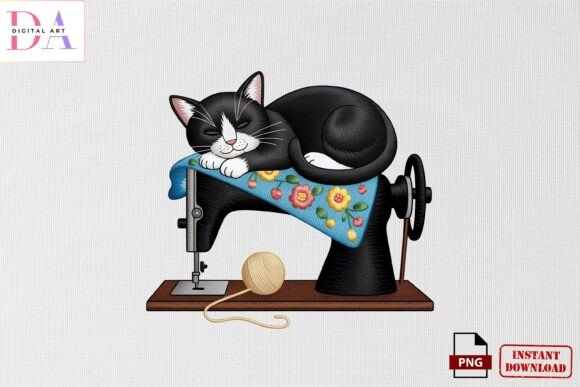
First glance at the Embroidery Cat Sewing Machine PNG lands softly—not with bold graphics or sharp edges, but with a quiet, cozy charm. It’s a sleepy tuxedo cat curled snugly atop a vintage sewing machine, draped in delicate floral cloth, yarn playfully spilling forward. There’s no frantic energy here—just warmth, nostalgia, and a gentle nod to craft tradition. As a designer who’s stitched hundreds of machine embroidery designs for real clients and small shop launches, I immediately sense this isn’t just decoration—it’s storytelling in thread.
Where This Design Naturally Lives (and Thrives)
I recently tested the Embroidery Cat Sewing Machine PNG as the centerpiece for a limited-run batch of linen aprons for a local sewing studio’s holiday pop-up. The result? Customers paused mid-aisle. They smiled. They asked, “Is that *your* cat?”—even though it wasn’t. That’s the quiet power of this design: it feels personal without needing customization. It fits effortlessly on tote bags meant for craft fairs, pillow covers for nursery decor, tea towels sold at boutique markets, and even baby onesies where softness and subtlety matter more than flash.
For Etsy sellers and handmade shop owners, this is a strong candidate for curated gift sets—pair it with a mini ball of yarn, a vintage button, and a handwritten note. As a sweatshirt embroidery design, it reads beautifully at 3.5–4 inches wide: balanced, legible, and full of character without overwhelming the garment. On caps? Use caution—it’s not ideal for curved, tight surfaces unless resized thoughtfully and digitized for low-profile stitching.
What Holds Up—and What Needs Thoughtful Handling
The composition is smart: the cat anchors the center, the sewing machine provides horizontal structure, and the yarn adds gentle movement. That means it translates well across fabric types—but only if you respect its rhythm. On textured fabrics like terry cloth or heavy canvas, the fine details in the floral cloth may soften. On thin or stretchy fabric—think lightweight cotton tees or baby knit—use a medium-weight cutaway stabilizer and test stitch density first. Too much fill stitch in the floral area can cause puckering; too little, and the design loses its richness.
Dark fabric brings out the cat’s tuxedo contrast beautifully—if your thread colors are chosen with intention. But avoid relying solely on automatic color mapping. Pull up a black-and-white mockup first: does the silhouette hold? Does the yarn ball still read as dimension, or just a blob? I’ve seen this design lose clarity on deep navy sweatshirts when thread contrast wasn’t adjusted—so always preview in grayscale before finalizing.
Where Simplicity Becomes Strength
This isn’t an applique design loaded with layers or satin-stitch borders demanding precision. Its strength lies in clean lines and intentional negative space—the kind that lets the fabric breathe and the craftsmanship shine. That makes it unusually versatile for commercial embroidery: fewer thread breaks, smoother hooping, and reliable repeat performance across dozens of garments. For a craft business owner running a small shop, that reliability saves time, reduces waste, and builds consistent brand recognition.
It also elevates perceived value. A customer buying a personalized gift—a baby blanket with this design stitched in soft pastel threads—doesn’t just see “a cat.” They see care, continuity, and creative intention. That emotional resonance translates directly into trust, repeat orders, and word-of-mouth referrals.
Practical Designer Notes Before You Stitch
- Always test on scrap fabric first—especially if using textured, dark, or stretchy materials. Watch how the floral cloth detail settles and whether the yarn retains shape.
- Review stitch density before scaling. Enlarging beyond recommended dimensions may overfill areas and strain your machine or fabric.
- Confirm hoop size compatibility. This design works best in a 4x4 or larger hoop. If you’re working with smaller hoops (like for cap fronts), plan for strategic cropping—not forced shrinking.
- Inspect small details: the cat’s ear curve, the stitching lines on the sewing machine, the subtle loops in the yarn. These define its personality—don’t let them blur in production.
- Use proper stabilizer. Medium cutaway for stable wovens; tear-away for lighter projects like tea towels—but never skip stabilization on knits.
- Check licensing. Since this is a digital embroidery file in the Graphics category, confirm whether your intended use—especially selling finished embroidered products or reselling the file itself—is permitted. When in doubt, contact the creator.
- Compare light vs. dark backgrounds in printable mockups. A design this warm gains depth on charcoal, but can feel muted on heather grey unless thread brightness is dialed up.
Final Thought: A Quiet Anchor for Meaningful Making
The Embroidery Cat Sewing Machine PNG won’t shout from a crowded craft fair table—but it doesn’t need to. It draws people in. It fits naturally into the hands of makers who value authenticity over algorithm-friendly trends. Whether you're designing custom apparel for a local boutique, building a cohesive line of nursery decor, or creating heartfelt holiday embroidery for family gifts, this design supports your voice instead of competing with it.
It reminds us why we stitch in the first place: not just to make things, but to make things that feel seen, held, and quietly loved. And that—more than any stitch count or file format—is what makes a design truly ready for real project use.