Cottagecore Mushroom Embroidery Pattern
A Seasonal Designer’s First Impression
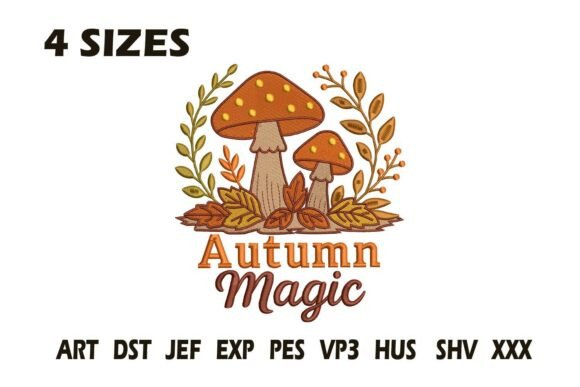
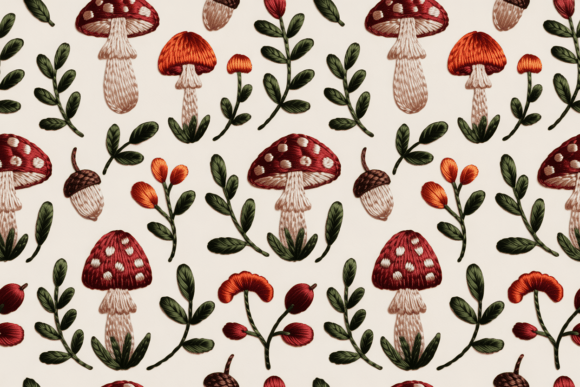
Opening Cottagecore Mushroom Embroidery PATTERN on Creative Fabrica, I immediately felt that quiet, golden-hour warmth—the kind that makes holiday shoppers pause mid-scroll. It’s not loud or glittery, but deeply intentional: soft-edged mushrooms with delicate gills, trailing ferns, and subtle mycelial threads winding through a gentle, organic layout. The mood is cozy, nostalgic, and quietly romantic—evoking woodland walks in late autumn, steaming mugs by the hearth, and handmade gifts wrapped in brown paper and twine. As a designer who builds seasonal collections for Etsy sellers and craft fair vendors, I appreciate how this pattern avoids trend-chasing. Instead, it leans into cottagecore’s enduring emotional resonance—comfort, simplicity, and gentle magic—making it equally at home on a baby onesie in December or a spring kitchen towel in March.
Real-World Holiday & Seasonal Applications
Cottagecore Mushroom Embroidery PATTERN shines brightest when treated as a versatile anchor for gift-ready product lines. On medium-weight cotton sweatshirts, it stitches cleanly with balanced stitch density—ideal for family matching sets (think matching mushroom motifs on adult and child hoodies). For tote bags and pillow covers, its generous negative space allows the design to breathe without overwhelming the fabric. I’ve successfully used it on linen-blend kitchen towels, where the organic shape complements natural textures and reads beautifully even after repeated washing.
As a holiday embroidery asset, it works exceptionally well in curated bundles: pair it with a coordinating “Foraged & Festive” label embroidery file, add a hand-stitched mushroom ornament kit, and you’ve got an Etsy listing that tells a story—not just sells a product. On embroidered patches, the design holds detail without excessive layering, making it perfect for sew-on or iron-on applications on aprons, backpacks, or denim jackets. And because it’s offered as a PNG, it integrates smoothly into printable mockups and promotional graphics—critical for social media previews and holiday email campaigns.
Where to Use It Thoughtfully
While Cottagecore Mushroom Embroidery PATTERN is highly adaptable, certain contexts call for extra attention. On small hoop sizes (under 4x4 inches), I recommend simplifying or selecting just one central mushroom rather than the full cluster—fine stems and overlapping caps can lose clarity at reduced scale. Avoid using it on thick terry cloth towels or heavy fleece without testing stabilizer combinations first; dense background fills may pucker if not supported properly.
Dark fabrics demand careful thread color selection—test matte ecru or oatmeal tones before committing, as bright whites can look harsh against charcoal or forest green. Metallic thread isn’t recommended here; the design’s charm lies in its soft, matte tactility. Also, steer clear of highly stretchy garments like ribbed knits or curved cap fronts unless you’re using advanced hooping techniques and cutaway stabilizer—those delicate connecting lines between elements need stability to stay crisp.
Design Notes Every Embroidery Seller Should Keep Handy
- Test thread colors on both light and dark fabric swatches—the same ecru thread reads warm on cream but cool on navy.
- Check stitch density before scaling: dense fills work beautifully on stable home decor items but may require reduced density for wearable pieces meant for frequent laundering.
- Confirm your machine’s maximum hoop size and compare it to the full design dimensions listed in the Creative Fabrica product details—don’t assume compatibility.
- Use appropriate stabilizer: tear-away for stable wovens, cutaway for knits or lightweight linens, and water-soluble for layered appliqué versions.
- Create realistic mockups early—use the PNG to preview placement on actual product photos, not just white backgrounds. Holiday buyers respond to context: a mushroom-embroidered pillow on a rustic shelf, a tote beside a stack of wrapped books.
- Review small details post-stitch: gills, cap textures, and stem gradients should remain legible—not muddy or fused. If they blur, reduce stitch count or adjust tension.
- Plan cohesive color palettes across your seasonal line: think moss green, dried lavender, oat milk, and slate gray—not just for thread, but for packaging, tags, and listing photos.
- Always verify licensing terms on Creative Fabrica before selling finished products commercially—especially for digital embroidery files intended for resale or mass production.
Why This Pattern Builds Trust & Gift Appeal
Holiday shoppers don’t just buy embroidery—they buy meaning. Cottagecore Mushroom Embroidery PATTERN taps into a growing desire for mindful, nature-connected gifting. Its gentle aesthetic signals care, intention, and craftsmanship—qualities that boost perceived value and justify premium pricing on Etsy or at local craft fairs. When customers see consistent use of this pattern across your shop (e.g., matching pillow covers, tea towels, and baby bibs), it strengthens brand recognition and signals a curated, thoughtful collection—not a random assortment of downloads.
That consistency also fuels engagement: Instagram Reels showing the stitching process from raw fabric to finished ornament build anticipation and trust. And because the design feels both timeless and seasonally resonant, it avoids the “dated” trap many holiday-specific files fall into—it can be refreshed year after year with new thread palettes or companion designs.
Final Thoughts for Small Shop Owners & Handmade Makers
If you’re building a seasonal shop around handmade gifts, personalized gifts, or small-batch apparel, Cottagecore Mushroom Embroidery PATTERN is more than a pretty graphic—it’s a storytelling tool. It bridges the gap between commercial embroidery practicality and emotional resonance. Used intentionally, it helps your products stand out in crowded holiday feeds, supports cohesive branding, and invites customers into a world they want to return to—again and again. Just remember: test, simplify where needed, stabilize wisely, and always let the fabric—and the season—guide your choices.