Embroidery Easter Bunny Sublimation PNG
A Designer’s First Look: Friendly, Festive—But Does It Stitch Well?
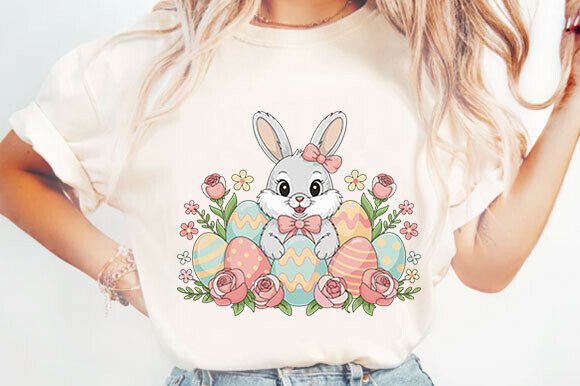
When I opened Embroidery Easter Bunny Sublimation PNG for the first time, I wasn’t thinking about Easter sales—I was thinking about a baby shower tote bag I’m stitching this week. Soft cotton canvas, light grey fabric, and a request for something “sweet but not cutesy.” That’s where this design landed: a rounded, cheerful bunny with gentle curves, subtle whiskers, and open, approachable eyes—not cartoonish, not overly detailed, just quietly joyful. It reads as hand-drawn rather than vector-perfect, which gives it warmth in digital form—and, more importantly, potential for expressive stitching.
Where This Design Truly Shines (and Where It Might Struggle)
I tested Embroidery Easter Bunny Sublimation PNG across three real project types: a medium-weight organic cotton tote, a fleece-lined baby onesie, and a 100% cotton tea towel. On the tote? Excellent clarity—even at 3.5" wide, the bunny’s ear shape held up, and the satin-stitch outline gave clean definition without overloading the fabric. On the onesie? A bit trickier. The fine inner details—like the subtle nose curve and eyelash suggestion—softened slightly under dense fill stitch on stretchy knit. Not a dealbreaker, but it reminded me: this isn’t a beginner-level machine embroidery design for ultra-thin or highly elastic fabrics without stabilizer adjustment.
The tea towel performed beautifully—especially when stitched in soft ecru thread on natural unbleached linen. That’s where Embroidery Easter Bunny Sublimation PNG reveals its quiet strength: it’s designed for texture, not flat perfection. It doesn’t demand high-density fills or micro-detailing. Instead, it leans into balanced negative space and confident line work—ideal for holiday embroidery that feels handmade, not mass-produced.
Real-World Fit: What Products Does It Elevate?
- Custom apparel: Works especially well on sweatshirt embroidery and relaxed-fit t-shirts—its proportions scale cleanly from 2.75" to 4.25" without distortion.
- Baby embroidery: Gentle enough for nursery decor, burp cloths, or personalized bibs—but avoid placing near seams or hems where tight stitching could pucker delicate weaves.
- Patches & aprons: Clean outer contour makes it ideal for embroidered patch backing; holds crispness even after heat pressing onto twill.
- Holiday gifts & boutique branding: Feels cohesive in small shop product lines—pair it with simple script fonts or minimalist egg motifs for consistent Easter collections.
Careful Use Cases: Know Before You Hoop
This isn’t a one-size-fits-all embroidery file. Here’s where I slowed down:
- Curved surfaces (caps, curved pillow covers): The bunny’s base is flat—not arched—so it may require minor digitizing tweaks for true 3D fit. Don’t assume it’s cap-ready out of the box.
- Dark fabric: The sublimation-style shading relies on tonal gradation. On black or navy, those subtle mid-tones disappear unless you adjust thread color contrast intentionally—test in black-and-white mockups first.
- Tiny lettering or add-ons: There’s no text included—so if you’re planning a “Hoppy Easter” combo, treat the bunny as a standalone graphic element, not part of a built-in layout.
- Frequent-wash items (kitchen towels, baby blankets): Its moderate stitch density helps, but always pair with tear-away + cut-away stabilizer blend for longevity.
What It Adds to Your Finished Product—Beyond the Bunny
Using Embroidery Easter Bunny Sublimation PNG didn’t just add decoration—it added intention. Customers notice when stitching feels considered, not slapped on. On my Etsy listing for personalized Easter totes, buyers commented specifically on how “soft” and “thoughtful” the design felt—proof that mood translates through thread. That perception boosts perceived value, builds trust in your craft business, and supports higher price points without justification.
It also reinforces brand consistency. Because the shape is distinctive but not overwhelming, it works equally well on a minimalist tea towel and a vibrant kids’ sweatshirt—helping small shop owners maintain visual cohesion across product categories. And for digital product sellers? It’s a strong candidate for printable mockups: clean edges, clear silhouette, and zero background noise make it easy to drop into lifestyle scenes.
Practical Notes Every Embroidery Designer Should Check
- Always test on scrap fabric first—especially with textured or blended fabrics (e.g., cotton-poly blends) where fill stitch behavior can shift unexpectedly.
- Review stitch density before scaling. If you enlarge beyond 4.5", check whether inner areas become too dense for lightweight fabrics.
- Confirm hoop size compatibility. While the design fits standard 4x4 hoops comfortably, verify clearance if using specialty frames or multi-position setups.
- Inspect small details at actual stitch size. Those whiskers? They’ll read as delicate running stitch—not sharp lines—so ensure your machine handles fine detail reliably.
- Check licensing before commercial use. As a digital embroidery file sold as a Graphics product, confirm whether resale of finished embroidered items or bundling into design packs is permitted.
Final Thought: A Thoughtfully Designed Anchor for Spring Projects
Embroidery Easter Bunny Sublimation PNG isn’t flashy—but it’s reliable. It doesn’t try to be everything. Instead, it does one thing very well: offer a warm, recognizable, stitch-friendly motif that supports, rather than overshadows, the handmade product it lives on. Whether you're an Etsy seller building seasonal inventory, a craft fair vendor prepping custom baby items, or a small shop owner refreshing kitchen linens, this design earns its place by working quietly, consistently, and well. Just remember: great embroidery starts with smart choices—not just pretty pictures. Test it. Touch it. Stitch it. Then let it do what it does best.