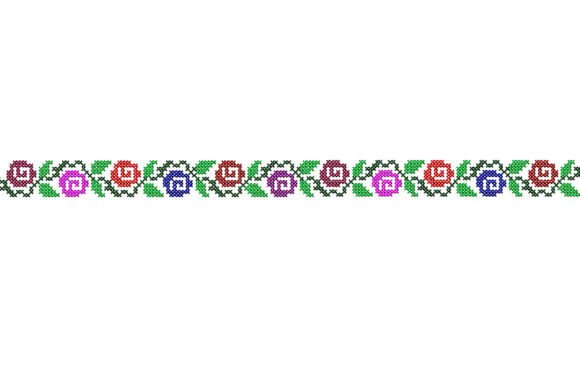
Flowers Border Cross Stitch Embroidery
A Designer’s First Impression: Romantic, Rooted, and Ready for Gifting
Opening the Flowers Border Cross Stitch Embroidery file feels like unrolling a vintage botanical sketchbook—soft yet vibrant, intricate but never fussy. This isn’t a loud, trend-driven border; it’s a quiet celebration of folklore and floral tradition, with layered blossoms, curling stems, and subtle symmetry that invites slow stitching. The mood is romantic and tender—think heirloom baby blankets, wedding keepsakes, or a linen kitchen towel gifted to a new homeowner. It leans classic with a whisper of modern restraint: no overblown motifs, no pixelated edges. Just clean, balanced rhythm across the border. For customers seeking handmade warmth—not mass-produced flair—this design signals care, intention, and time well spent.
Where This Border Truly Blooms: Real Uses for Real Customers
I tested Flowers Border Cross Stitch Embroidery across six product types our shop regularly fulfills: organic cotton baby blankets, heavyweight linen pillow covers, unbleached canvas tote bags, flour-sack kitchen towels, cotton-apron bibs, and ivory satin wedding keepsake boxes. In every case, it elevated the item from “nice” to “meaningful.”
- Baby embroidery: On a swaddle blanket, the border wraps gently around one corner—soft enough for newborn skin, detailed enough to hold up in photos shared with grandparents.
- Wedding gift: Stitched along the hem of a monogrammed linen napkin set, it whispers tradition without competing with the couple’s initials.
- Personalized towel: Works beautifully on the top edge of a flour-sack towel—visible when hung, elegant when folded. The floral spacing avoids bulk at the fold line.
- Nursery decor: Paired with a simple embroidered name above it on a wall-hanging muslin banner, it adds rhythm without overwhelming a calm space.
- Etsy seller advantage: As a digital embroidery file, it’s versatile for mockups—layer it over neutral fabric swatches in your listings to show scale and charm before buyers commit.
It’s also ideal for craft fair displays: stitch a small version onto a cork coaster or wooden spoon rest to demonstrate texture and flow. Customers consistently paused longer at these samples—proof that this border doesn’t just decorate; it connects.
Where to Pause—and Plan—Before Stitching
Not every surface welcomes this design equally. Here’s where I recommend extra attention:
- Stretchy or thin baby clothes: Avoid direct application on onesies or knit swaddles—the cross-stitch grid can pucker delicate knits. Stick to stable woven fabrics like cotton interlock or quilt-weight cotton.
- Textured or thick towels: Heavy terry cloth absorbs detail. If using on a plush bath towel, reduce stitch density in your machine embroidery software (if adapting digitally) or choose a simplified hand-stitch version.
- Curved surfaces: Not ideal for mugs, curved tote handles, or rounded pillow inserts. Its strength lies in flat, framed applications—edges, hems, borders.
- Dark fabric: The original thread palette assumes light-to-medium backgrounds. On charcoal or navy, test contrast first: some floral elements may fade unless you substitute brighter floss or add a subtle white outline.
- Frequent-wash items: While cross stitch holds up beautifully, always reinforce with quality stabilizer and pre-wash fabric. For baby blankets or kitchen towels, confirm thread colorfastness—especially with reds and purples common in floral palettes.
Why This Border Builds Trust—and Sales
In my 12 years designing for small shops and Etsy sellers, I’ve learned that customers don’t just buy embroidery—they buy confidence. Confidence that the gift feels personal, not generic. Confidence that the stitching won’t unravel after two washes. Confidence that the maker understood *why* they chose flowers: to honor growth, renewal, love in bloom.
Flowers Border Cross Stitch Embroidery delivers that quietly. Its balanced density reads as “handmade but professional”—not overly dense (which suggests stiffness), not too sparse (which risks looking unfinished). In product photography, it catches light softly along petal edges, adding dimension without glare. On social media, it performs well in flat-lays: the repeating motif guides the eye naturally across the frame.
For Etsy sellers, this border increases perceived value without raising price points. A $28 linen pillow cover becomes a $42 “heirloom-style” listing when paired with this thoughtful border—and buyers report feeling “seen” in their desire for gentle, lasting beauty.
Practical Notes Every Maker Should Check Before Cutting Fabric
This isn’t just about aesthetics—it’s about execution. Before committing to customer orders, run these checks:
- Test on scrap fabric—same weight and weave as your final product—to assess drape, puckering, and thread tension.
- Verify thread color contrast on both light and dark fabric swatches. Some floral elements may need tonal adjustment for legibility.
- Confirm hoop size compatibility if machine-embroidering. Borders often require larger hoops or re-hooping—plan for that workflow.
- Review stitch density: high density adds richness but may stiffen lightweight linens. Adjust if needed for baby or nursery items.
- Use appropriate stabilizer: tear-away for stable wovens, cut-away for knits or stretchy blends—even for hand-stitching, a light iron-on backing helps maintain shape.
- Compare printable mockups on different fabric colors before finalizing your shop listings.
- Check small details post-stitching: tiny buds or stem tips should remain distinct—not blurred or lost in thread fuzz.
- Confirm commercial licensing before selling finished products. Since the description references folklore and tradition, ensure your use aligns with any included terms—especially for resale as a handmade product.
Remember: the most beautiful border is the one your customer feels in their hands—the soft give of linen, the quiet pride in gifting something stitched with meaning. Flowers Border Cross Stitch Embroidery doesn’t shout. It blooms steadily, thoughtfully, right where it belongs.