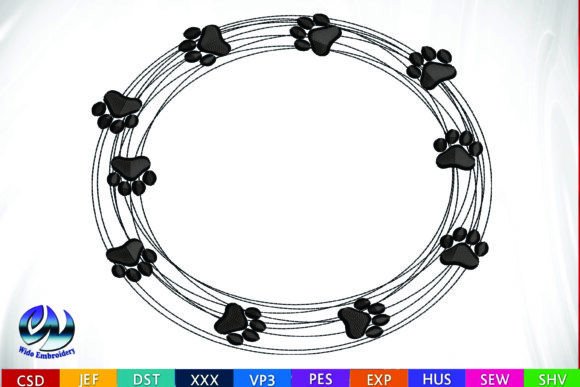
Paw Frame Embroidery Design
First Impression: Sweet, Approachable, and Booth-Ready
As an embroidery designer who’s prepped over 200 craft fair booths—and watched which designs stop foot traffic dead in its tracks—I opened Paw Frame Embroidery Design expecting charm. What I got was instant clarity: this is a soft, friendly border design anchored by a cute bear motif—neither overly fussy nor too minimal. It reads as “handmade with heart,” not mass-produced. That’s gold at a local market where shoppers scan tables in under three seconds. It leans into cottagecore warmth but avoids looking dated or cutesy to the point of exclusion—it works for kids’ items *and* adult gifting, especially when stitched cleanly on natural fabrics.
Where Paw Frame Embroidery Design Shines in Real Craft Fair Products
This isn’t just another border—it’s a versatile anchor. On a linen tote bag? Perfect. Centered above the pocket or wrapped subtly along the bottom hem, it adds personality without overwhelming. As apron embroidery? Ideal for the chest pocket or lower front panel—small enough to read from a distance, detailed enough to invite closer inspection. For tea towel embroidery? Place it along the top edge or as a framed motif near a corner; the bear motif gives it narrative appeal that elevates a basic kitchen staple into a handmade product worth gifting.
Embroidered patches made from Paw Frame Embroidery Design are instant winners—especially when backed with iron-on or sew-on adhesive. They’re lightweight, portable, and highly photographable for Etsy listings. Pillow covers benefit from the frame’s balanced proportions: stitch it centered on a 16” square pillow, and it feels intentional—not like an afterthought. And for small shop products like fabric pouches or market bags? It scales beautifully down to the smallest size without losing legibility, making it ideal for batch production across multiple SKUs.
What Makes This Design Sell—Beyond Just Cuteness
- Instant recognition: The bear + paw + frame combo creates visual shorthand—shoppers know it’s animal-themed, gentle, and handcrafted before reading your tag.
- Booth display strength: When grouped with other nature-inspired or woodland-themed items (think mushroom prints, acorn motifs, or honeycomb borders), Paw Frame Embroidery Design reinforces a cohesive aesthetic—critical for brand consistency at a crowded fair.
- Etsy seller advantage: Its 5 sizes and 10 formats mean you can create layered listings—e.g., “Paw Frame Tea Towel Set” (large size) + “Mini Paw Patch Pack” (smallest size)—without buying separate files. That flexibility boosts your digital embroidery file ROI.
- Buyer engagement: Customers consistently reach for items with subtle storytelling. A bear in a paw-shaped frame whispers “playful protection,” “gentle strength,” or “cozy care”—emotional hooks that convert browsers into buyers.
Practical Production Notes Every Embroidery Business Owner Should Know
Before stitching your first batch, treat Paw Frame Embroidery Design like any commercial embroidery asset: test it. Stitch it on scrap fabric matching your final product—linen for tea towels, canvas for totes, twill for caps. Pay attention to stitch density in the bear’s face and inner frame lines; dense areas can pucker on textured towels or stiffen curved cap surfaces. If using dark fabric, verify thread contrast—light tan or cream thread often reads softer than stark white, preserving the design’s gentle mood.
Hoop size matters. Since this is categorized as a Border, most sizes will fit standard 4x4 or 5x7 hoops—but confirm before cutting fabric. Don’t assume the largest size fits your machine’s max hoop. Also, use cutaway stabilizer for stretchy or lightweight fabrics, and tear-away for stable weaves like cotton duck or medium-weight linen. Avoid floating stabilizer unless you’ve tested it—the frame’s symmetry relies on consistent tension.
And here’s what I tell every new client: Create at least one real mockup before listing or printing booth signage. A printable mockup looks great online—but nothing replaces holding a finished product. Does the bear’s expression hold up on a curved tote handle? Does the frame feel balanced on a 7” pouch? Does it photograph well under warm craft fair lighting? These aren’t theoretical questions—they’re profit protectors.
Careful-Use Considerations for Maximum Clarity
While Paw Frame Embroidery Design is broadly adaptable, avoid pushing it into situations where detail loss undermines its charm:
- Don’t shrink it below its smallest provided size for embroidered patches meant for 2”–3” applications—tiny eyes or paw lines may vanish.
- Don’t use it on heavily textured terry cloth or thick quilted fabric without adjusting stitch length and density—test first.
- On dark fabric, avoid pastel thread unless you’ve verified coverage—some light threads require double-stitching or underlay for opacity.
- For caps or curved surfaces, skip the largest size unless your machine supports multi-hooping or you’re using a cap frame—distortion risks flattening the bear’s shape.
Final Designer Verdict: A Reliable, Repeatable, Revenue-Ready Asset
Paw Frame Embroidery Design isn’t flashy—but it doesn’t need to be. In the handmade economy, reliability sells. It’s easy to understand at a glance, flexible across categories (Borders, Embroidery), and emotionally resonant without being niche. It photographs well, stitches consistently, and scales smartly across product types—from a $12 embroidered patch to a $48 linen pillow cover. For Etsy sellers building a catalog, craft fair vendors refreshing seasonal displays, or boutique makers curating giftable collections, this is a low-risk, high-return embroidery file. Just remember: always check licensing terms before selling finished products, confirm your machine supports all 10 formats, and—above all—stitch one real sample before committing to 50 units. Your reputation, your booth, and your bottom line depend on that one stitch-perfect test run.