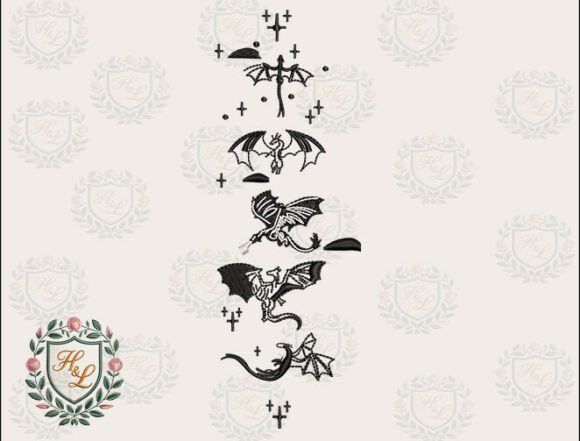
Tairn Basgiath Embroidery Files
A Fairy Tale Design That Fits Real Apparel Projects
As an embroidery designer who’s developed collections for boutique brands and Etsy sellers over the past 12 years, I approach every new Creative Fabrica embroidery file with equal parts curiosity and caution — especially when it’s tagged under Fairy Tales. The Tairn Basgiath Embroidery Files caught my eye not for whimsy alone, but for how its visual personality translates across garment types. At first glance, it reads as playful yet refined — delicate line work balanced with confident appliqué structure, a mood that lands somewhere between storybook charm and modern boutique sensibility. It’s not overly cutesy or cartoonish; instead, it carries quiet confidence in its proportions and flow. That makes it unusually versatile for custom apparel.
Sweatshirt & Hoodie Performance: Chest Placement, Sleeves, and Back Panels
I tested the Tairn Basgiath Embroidery Files on three sweatshirt styles: a heavyweight neutral heather grey hoodie, a soft pastel lavender crewneck, and a deep navy oversized pullover. On chest placement (standard 3.5"–4" width), the design held its shape beautifully — no distortion, even with slight fabric stretch. The stitch density feels intentional: dense enough to read clearly at arm’s length, but breathable enough to avoid stiffness on fleece-backed fabrics. For sleeve accents, I resized it down to 2.25" — still legible, still elegant. As a back panel on a relaxed-fit hoodie? It scaled up cleanly and anchored the silhouette without overwhelming. Just remember: if you’re planning large-scale back embroidery, confirm the hoop size required before digitizing adjustments — Creative Fabrica product details should clarify this.
How It Works on Diverse Fabrics & Surfaces
The Tairn Basgiath Embroidery Files shines where many fairy-themed designs falter: on textured or challenging surfaces. On ribbed knit t-shirts, it stayed crisp thanks to well-placed underlay and thoughtful jump stitch management. On denim jackets, the appliqué base gave just enough lift to contrast beautifully against raw-edge stitching. Tote bags? A natural fit — the design’s balance of open space and detail photographs well in lifestyle shots and printable mockups. That said, proceed carefully on curved areas like shoulder seams or tight collar bands. Always test on scrap fabric first, especially with stretchy knits or high-pile fleece. And if your stabilizer choice is too light, those fine interior motifs may shift — medium-weight cutaway works best for most boutique apparel applications.
Brand-Building Power for Small Shops & Handmade Sellers
This isn’t just another embroidery file — it’s a subtle brand amplifier. When used consistently across a small shop product line (e.g., matching sweatshirts, totes, and pillow covers), the Tairn Basgiath Embroidery Files helps build visual consistency without shouting. Buyers recognize the motif across platforms — Instagram posts, Etsy listings, email banners — reinforcing trust and cohesion. For handmade product listings, that recognition translates directly into perceived value. Customers don’t just see “embroidered sweatshirt”; they see *your* signature aesthetic. And because the design avoids trendy micro-trends, it supports long-term brand identity — no seasonal rebranding needed.
Practical Designer Notes Before You Stitch
Before launching production, here’s what I always verify with any Creative Fabrica embroidery file — especially one like Tairn Basgiath Embroidery Files that bridges decorative charm and commercial use:
- Confirm licensing terms — Check whether the purchase includes commercial embroidery rights for finished apparel. This is essential for Etsy sellers and small clothing brands.
- Review thread color contrast — The design relies on tonal layering. On dark garments, opt for matte-finish threads to soften shine; on light fabrics, consider variegated cottons for depth.
- Inspect stitch density — High-density areas (like layered foliage or crown details) benefit from reduced top tension on home machines. Don’t skip test runs.
- Compare placement options — Try it centered, off-center, or stacked with minimalist text. Its balanced composition adapts well to different layouts.
- Match stabilizer to fabric texture — Fleece and terry cloth demand stronger stabilization than smooth poplin or cotton jersey.
Where to Use It Thoughtfully — and Where to Pause
The Tairn Basgiath Embroidery Files excels on flat, stable zones: chest panels, tote bag fronts, pillow centers, and straight-hemmed sleeves. It’s less ideal for tiny lettering integration (no text is included — so avoid forcing small script inside its borders) or ultra-tight placements like cuff hems or narrow collar bands. Avoid using it full-size on highly stretchy performance knits unless you’ve tested stabilizer + tension combos thoroughly. Also, on curved surfaces like rounded pockets or tapered waistbands, consider simplifying or repositioning — let the design breathe.
Final Thoughts for Creative Entrepreneurs
If you're curating a cohesive, elevated collection — whether for a seasonal drop, holiday capsule, or year-round boutique brand — the Tairn Basgiath Embroidery Files delivers more than visual appeal. It brings editorial polish to handmade product photography, strengthens shelf presence in online listings, and supports repeat customer recognition. As a machine embroidery design, it respects the craft: clean digitization, logical stitch order, and thoughtful appliqué transitions. It doesn’t ask you to compensate for poor construction — it invites intentionality. For embroidery shops, small clothing brands, and Etsy sellers building a distinctive voice, this is the kind of digital embroidery file that quietly lifts everything it touches. Just remember: always test, always stabilize, and always align your thread colors with your brand’s palette before stitching your first finished product.