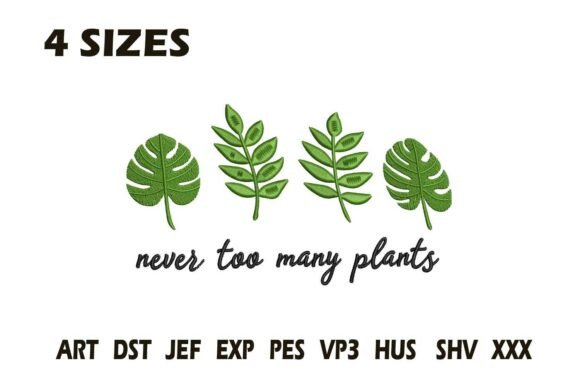
Never Too Many Plants Embroidery Design
First Impression: Whimsical, Warm, and Instantly Relatable
As an embroidery designer who’s stitched for over a dozen craft fairs—and watched thousands of shoppers pause at my booth—my first thought when I saw Never Too Many Plants Embroidery Design was: this lands right in the sweet spot. It’s not overly botanical or stiffly formal; it’s playful, gently humorous, and full of quiet charm. The title alone sparks recognition—every plant lover, beginner gardener, and “I killed my third succulent” shopper nods along. Visually, it reads as modern-farmhouse meets cozy handmade: soft curves, friendly scale, and that unmistakable “I’d hang this on my wall *and* wear it on my apron” energy. It fits cleanly within the Single Flowers category but feels broader—more lifestyle than literal flora.
Where It Shines: Craft Fair-Ready Product Pairings
This machine embroidery design isn’t just versatile—it’s strategic. On a natural canvas tote bag? Instant personality. The phrase reads clearly from three feet away, and the plant motif adds organic movement without overwhelming the fabric. As apron embroidery, it anchors beautifully above the pocket—friendly, functional, and photo-ready for Instagram stories. For tea towel embroidery, it balances utility and whimsy: not so dense that it compromises absorbency, yet detailed enough to feel special when folded on a market table.
It’s also a standout as an embroidered patch. Trimmed and backed, it becomes a collectible—ideal for pinboards, denim jackets, or gift tags. On small pouches and pillow covers, Never Too Many Plants Embroidery Design holds its shape and legibility even at 3–4 inches wide. And yes—it works on caps, but with caveats (more on that below). As a craft fair product, it elevates everyday items into memorable handmade products without demanding premium pricing.
Online & Booth Performance: Attention, Clarity, and Consistency
For Etsy sellers and digital crafters, this design photographs exceptionally well. Its balanced negative space and clear lettering translate cleanly into printable mockups, and the phrase is instantly searchable (“plant lover embroidery,” “funny plant quote,” “botanical tote design”). In person, it draws eyes—not with flash, but with warmth. At a crowded fair, it stands out because it feels human, not algorithmic.
That relatability strengthens brand consistency across your line: pair it with neutral linens, terracotta ceramics, or kraft packaging, and it reinforces a cohesive, grounded aesthetic. It also invites engagement—shoppers smile, quote the phrase aloud, and often ask, “Do you have it on mugs?” That’s free marketing.
Production Reality Check: What Works—and What Needs Care
Let’s be practical: Never Too Many Plants Embroidery Design is highly batch-friendly, but not auto-pilot. Its charm lies in rhythm and spacing—not extreme density—so stitch density is likely moderate (always verify your embroidery file specs before cutting fabric). Still, watch for tight clusters where leaves meet stems or letters tuck close together. On textured towels or thick canvas, those areas may need extra stabilizer support to prevent puckering.
Small lettering? Yes—the phrase is readable at 2.5", but avoid shrinking below 2" on curved surfaces like caps or small pouches. On dark fabric, contrast matters: choose thread colors that pop (kelly green + creamy white, sage + oatmeal) rather than blending. And always test on scrap fabric—especially with looped terry or slubby linen—to confirm how the design settles into the fabric texture.
Smart Designer Notes Before You Stitch
- Test first: Run a sample on your exact fabric + stabilizer combo—not just muslin.
- Check thread contrast: Soft phrases fade fast on busy prints or heathered knits.
- Review spacing: Ensure letter-to-leaf breathing room doesn’t collapse at smaller sizes.
- Confirm hoop size: This design likely fits standard 4x4 or 5x7 hoops—but verify before digitizing or resizing.
- Inspect stitch density: Look for overlapping fills or tiny satin stitches that may snag on rough surfaces.
- Use the right stabilizer: Tear-away for stable wovens; cut-away for knits or stretchy fabrics.
- Create one real mockup: A finished tea towel or tote tells you more than ten screen previews.
- Compare fabric colors: A mint thread on sage linen reads differently than on ivory cotton.
- Confirm commercial licensing: Since you’re selling finished products, ensure your digital embroidery file includes rights for commercial embroidery.
Why It Sells—Beyond the Stitches
Never Too Many Plants Embroidery Design succeeds because it answers unspoken questions shoppers ask at craft fairs: “Does this feel special?” (Yes—hand-stitched energy, even when machine-made.) “Is it me?” (Yes—gentle humor, zero pretense.) “Will it last?” (Yes—if stabilized and stitched with care, it becomes part of their daily ritual.) It transforms a simple small shop product into a conversation starter, a gift-with-meaning, and a repeatable design asset across your entire lineup.
On booth day, it performs quietly but powerfully: no neon sign needed, no loud pitch required. Just a well-placed embroidered tote, a stack of tea towels folded just so, and that warm, familiar phrase saying exactly what your ideal customer already believes. That’s not just stitching—it’s connection, crafted one thread at a time.